“How much does a custom booth cost?” The honest answer is that it depends — but that’s not a dodge. The variables are knowable, and once you can see them, you can steer the budget instead of being surprised by it.
Why there’s no sticker price
A custom booth is quoted to a specific space, brief, and show — so any number quoted without those three is meaningless. The same brand can spend modestly on a compact, sharp presence or many times that on a flagship build, and both can be the right decision. What’s consistent isn’t the price; it’s the set of things that move it.
What actually drives the price
Almost every line on a custom-booth quote traces back to one of these seven.
Footprint and height
Square meters set the floor price; going vertical — tall elements, hanging signs, a second level — adds structure, rigging, and engineering on top.
Structure and materials
What it’s made of and how it’s finished. Raw panels are cheap; custom millwork, curves, and complex forms in premium materials are not.
Custom fabrication
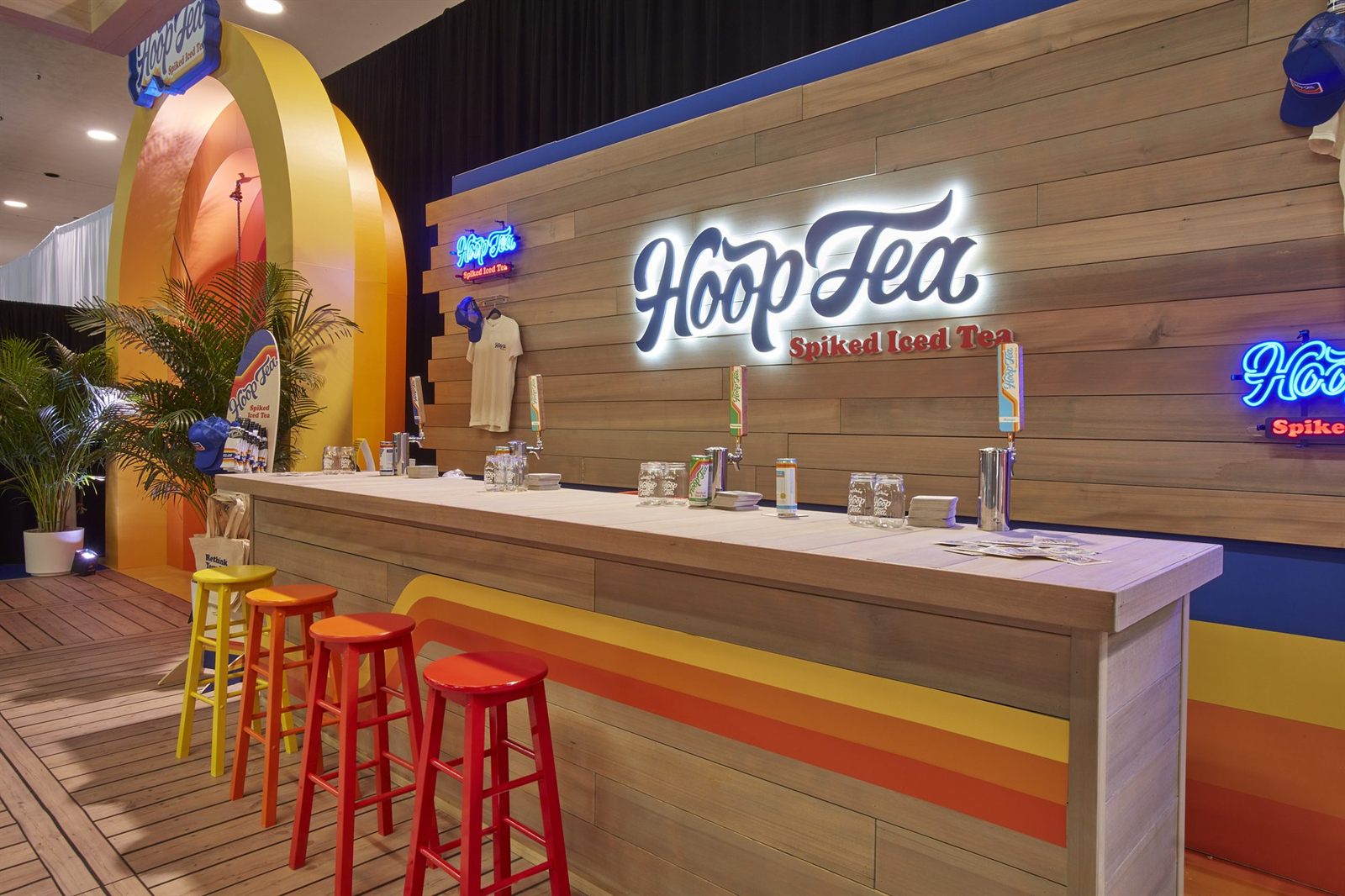
Anything built once, just for you — a sculptural centerpiece, a branded bar, a backlit logo wall — is craft time, not a catalog price.
AV, lighting, and tech
Screens, LED walls, lighting rigs, and interactive or demo technology. This is where budgets quietly grow the fastest.
Graphics and finishes
Large-format printing, backlit panels, and real materials versus printed lookalikes. The difference is invisible from the aisle and obvious up close.
Install, labor, and logistics
Build and teardown crews, freight, storage, and venue fees — plus the timeline. A rushed schedule always costs more than a planned one.
Reuse and durability
Building to survive several shows costs more up front and far less per show. A disposable build is cheap once and expensive twice.
Thinking in tiers
It helps to think in three rough tiers rather than a single number. An entry presence buys a clean, well-built, well-lit stand that looks professional and does the job. A mid custom build adds a genuine hero element, better materials, and a designed visitor experience. A flagship build is architecture — a space people photograph and remember. Most brands land in the middle, and the smartest spend more on the one thing visitors will remember than on spreading the budget evenly across everything.
Where the money is well spent
Put the budget where visitors actually experience it: the hero structure, the lighting, the one memorable moment, and the finishes at eye and hand level. Save on what no one sees — over-built backs of walls, storage you’ll never reuse, complexity that doesn’t change how the stand feels. And remember the cost most people forget: a build engineered to be re-skinned and reused across shows drops your cost per show every time you bring it back. Custom, done right, isn’t the expensive option — it’s the one that pays for itself.
The right question isn’t “what does it cost?” It’s “what is each peso buying” — and whether visitors will ever notice it.