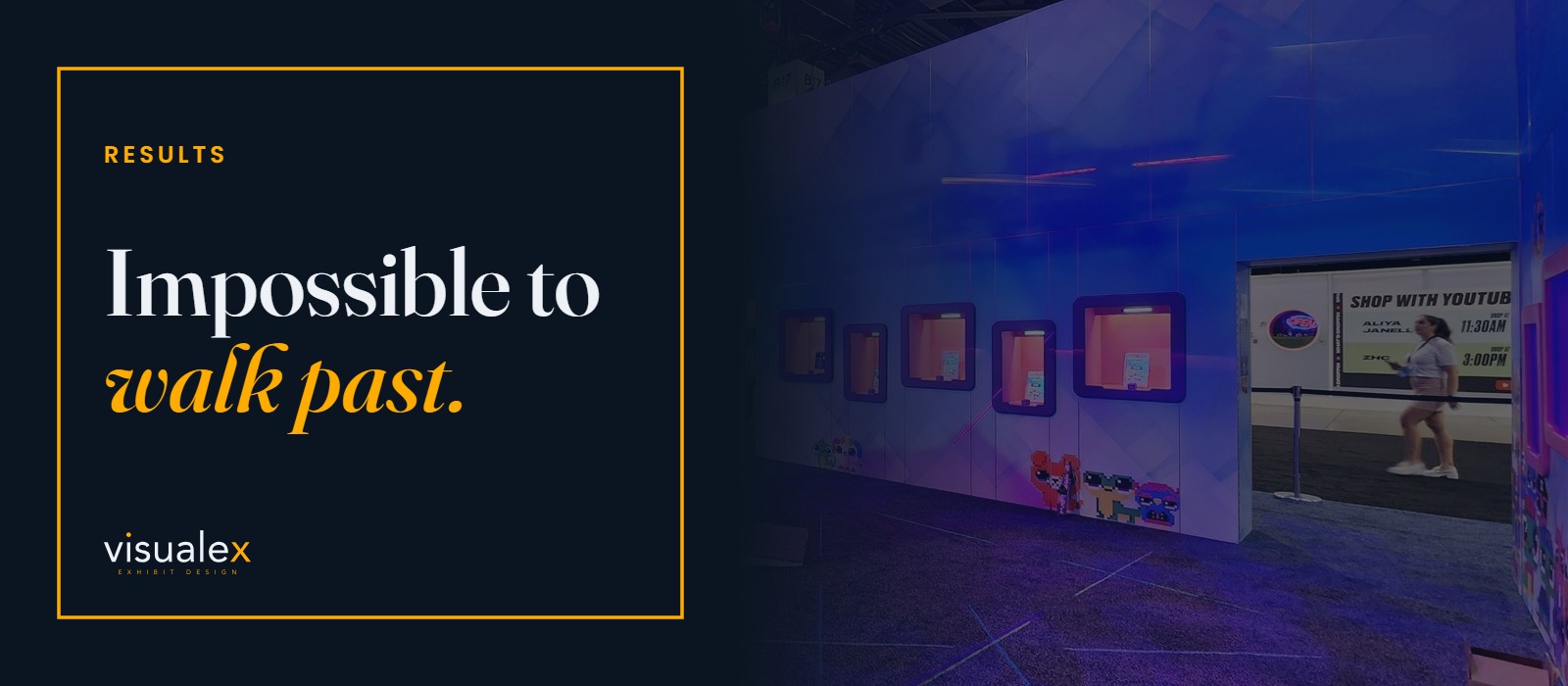
Most exhibitors try to drive booth traffic the day the doors open — a raffle here, a candy bowl there. Too late. The visitors who matter decided their route weeks ago, and the rest respond to design, not desperation. This is the two-part playbook: win the shortlist before the show, build a magnet on the floor, and follow up faster than everyone else.
Quality beats volume — every time
Let’s kill the vanity metric first. A stand crowded with badge-scanners and giveaway hunters photographs beautifully and dies quietly in your CRM. Traffic is not the goal; the right traffic is. One distributor with a budget and a deadline is worth more than a hundred students collecting pens — and your entire plan should be built around that math.
Industry research keeps confirming the same pattern: a large share of attendees shortlist the stands they’ll visit before they ever reach the venue. That means the fight for traffic starts weeks out — and the show floor is where you convert the plan, not where you improvise one. Split your effort accordingly: half before the show, half during, and a hard sprint after.
Before the show: earn a spot on the shortlist
On a floor like Corferias in Bogotá — a venue that hosts hundreds of events a year — nobody finds your stand by accident at the volume you need. Serious attendees walk in with an agenda: meetings booked, a shortlist drawn, a route already traced through the halls. Your pre-show job is simple to state and demanding to execute — get on that list. Five moves, in order of impact.
- 1Work the registered-attendee listAsk the organizer for whatever attendee data is available to you, cross it with your own database, and build a named target list — companies and people, not personas.
- 2Anchor the show with booked meetingsConfirmed meetings are your traffic floor: ten scheduled conversations guarantee more pipeline than a thousand walk-bys, and they force your team to prepare.
- 3Own your directory and app profileComplete every field, write a benefit-led description instead of company boilerplate, and put your stand number where nobody can miss it.
- 4Run a three-touch email sequenceAnnounce, remind, then close with logistics — each email offering one concrete reason to visit: a launch, a demo slot, a conversation worth twenty minutes.
- 5Post a countdown, not confettiOn social, repeat one bold promise and your stand number; behind-the-scenes shots of the build beat generic “see you there” graphics every time.
During the show: design the stand as a magnet
Traffic on the floor obeys physics. Light pulls the eye, so treat lighting as a headline, not decoration — a well-lit stand reads from thirty meters while its neighbors blur into the aisle. Then give people one bold hook: a single message, visible from a distance, that a stranger can absorb in three seconds. Seven claims on a back wall equal zero claims. One sharp promise stops feet.
Movement holds what light attracts. Schedule short demo moments — five minutes, announced, repeated — so there’s always something about to happen at your stand. And take hospitality seriously: good coffee is not a perk, it’s dwell time. Every extra minute a visitor spends holding a warm cup is a minute your team has to open a real conversation.
None of this can be clipped onto a generic modular kit the week of the show. Magnetism is designed in — the sightlines, the lighting, the demo stage, the coffee bar — decisions made at the rendering stage, months before the freight ships. A stand assembled from a catalog competes on luck. A stand designed around these mechanics competes on intent.
Your team is the second design layer
The best-designed stand loses to a staffer staring at a phone. Posture is architecture: no sitting behind counters, no huddles of colleagues talking to each other, no eating at the stand. Bodies open toward the aisle, at the edge, available.
Then fix the opening line. “Can I help you?” invites a reflexive no. Train openers tied to your hook instead — “Want to see it run?”, “How are you handling this today?” — questions that start a conversation about the visitor’s problem, not your presence. And teach the team to disengage politely from low-fit visitors within two minutes; every conversation has an opportunity cost, measured in the qualified buyer walking past behind them.
After the show: the speed rule
Here’s the uncomfortable truth about follow-up: most exhibitors take days — sometimes weeks — to contact the leads they paid so much to meet, and by then the conversation belongs to whoever wrote first. Speed is the cheapest competitive advantage of the entire show. Draft your follow-up templates before the event, tag leads by priority as you scan them, and get the first personal message out within a day or two of the closing bell. A same-week proposal that references the exact conversation you had at the stand beats a generic “nice to meet you” blast sent ten days later — every single time.
Booth traffic isn’t won on the show floor — it’s won in the weeks when nobody is watching.